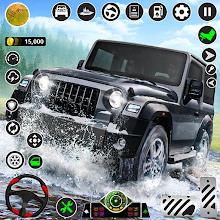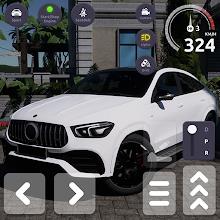
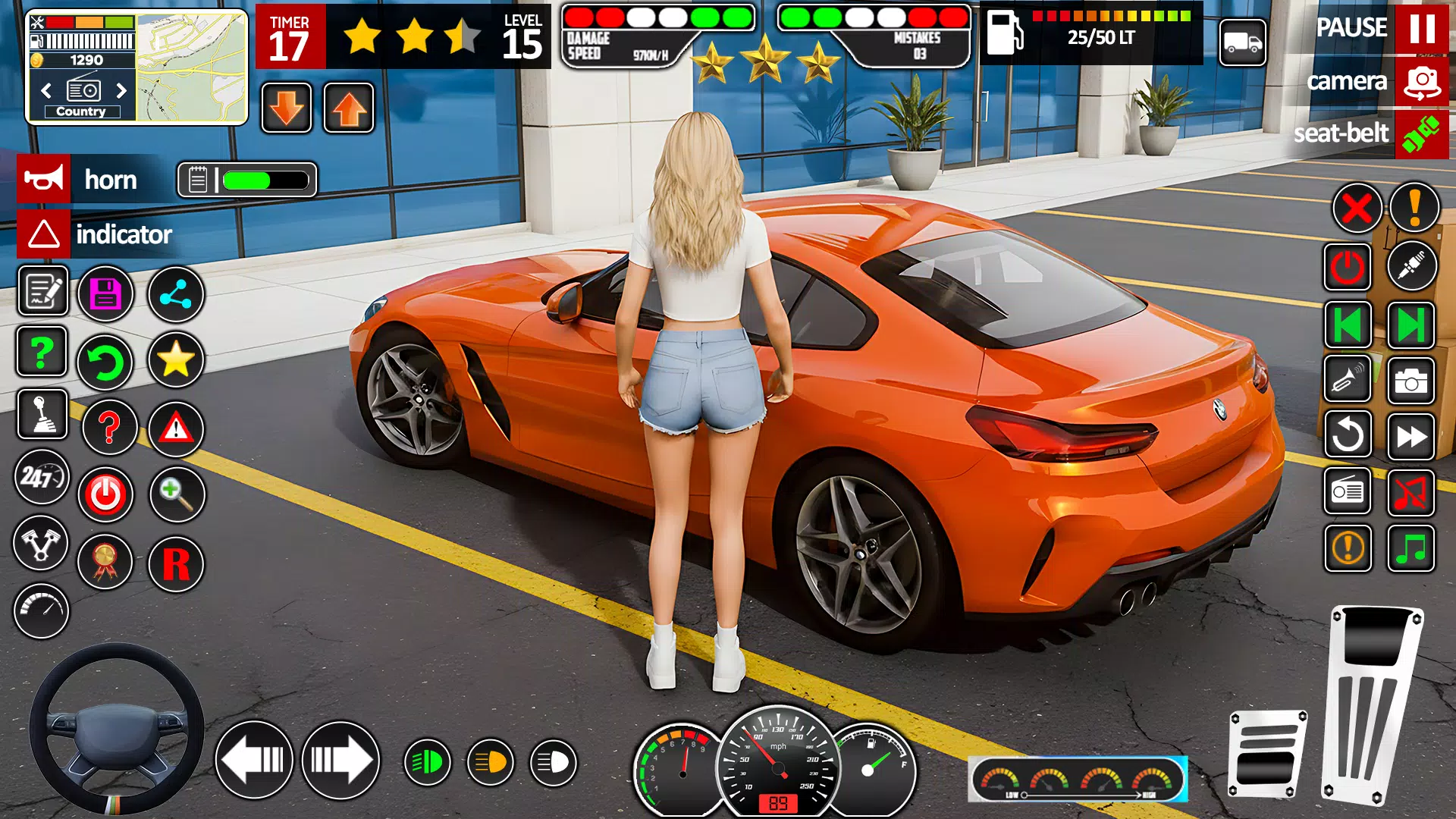
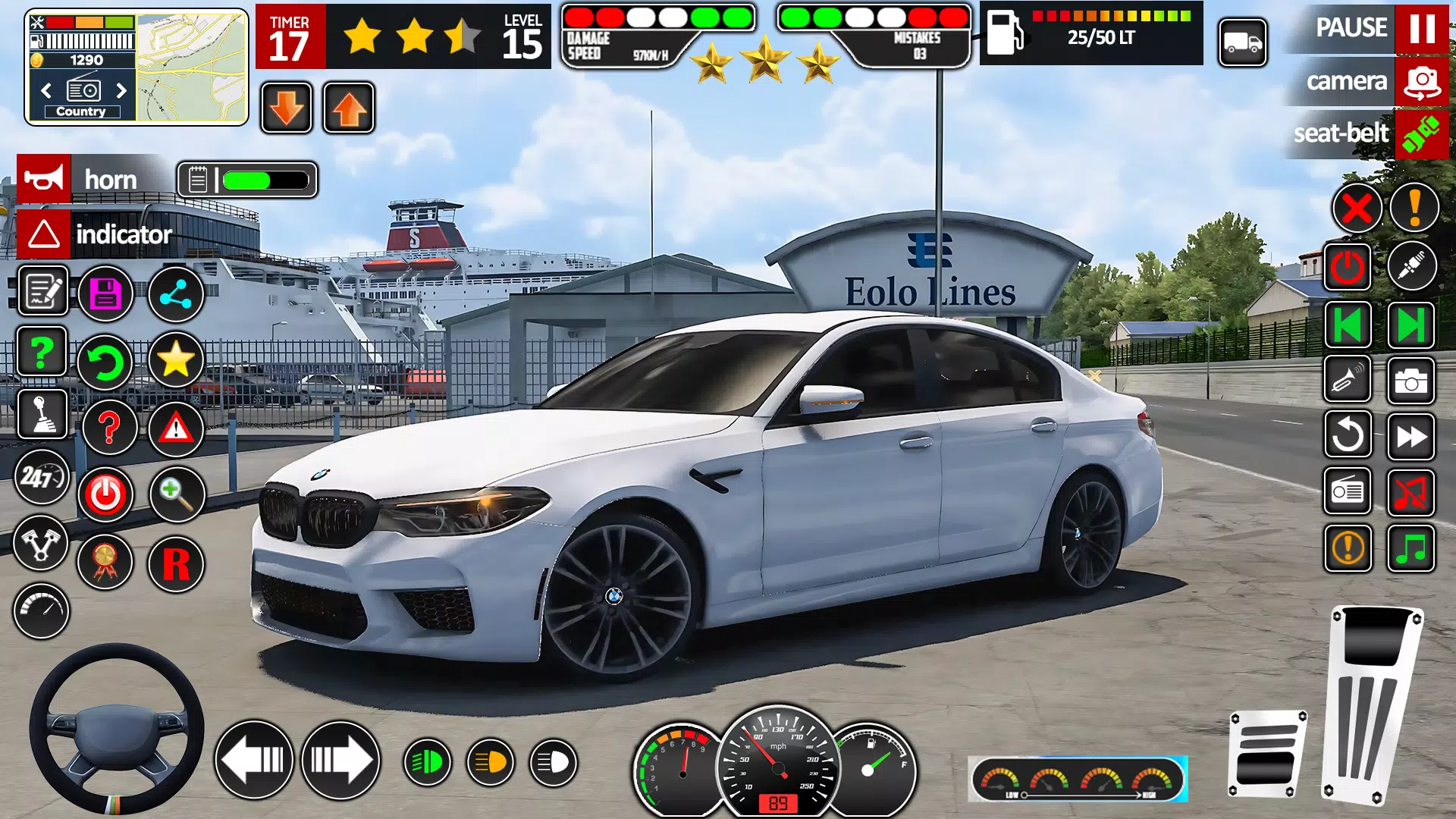
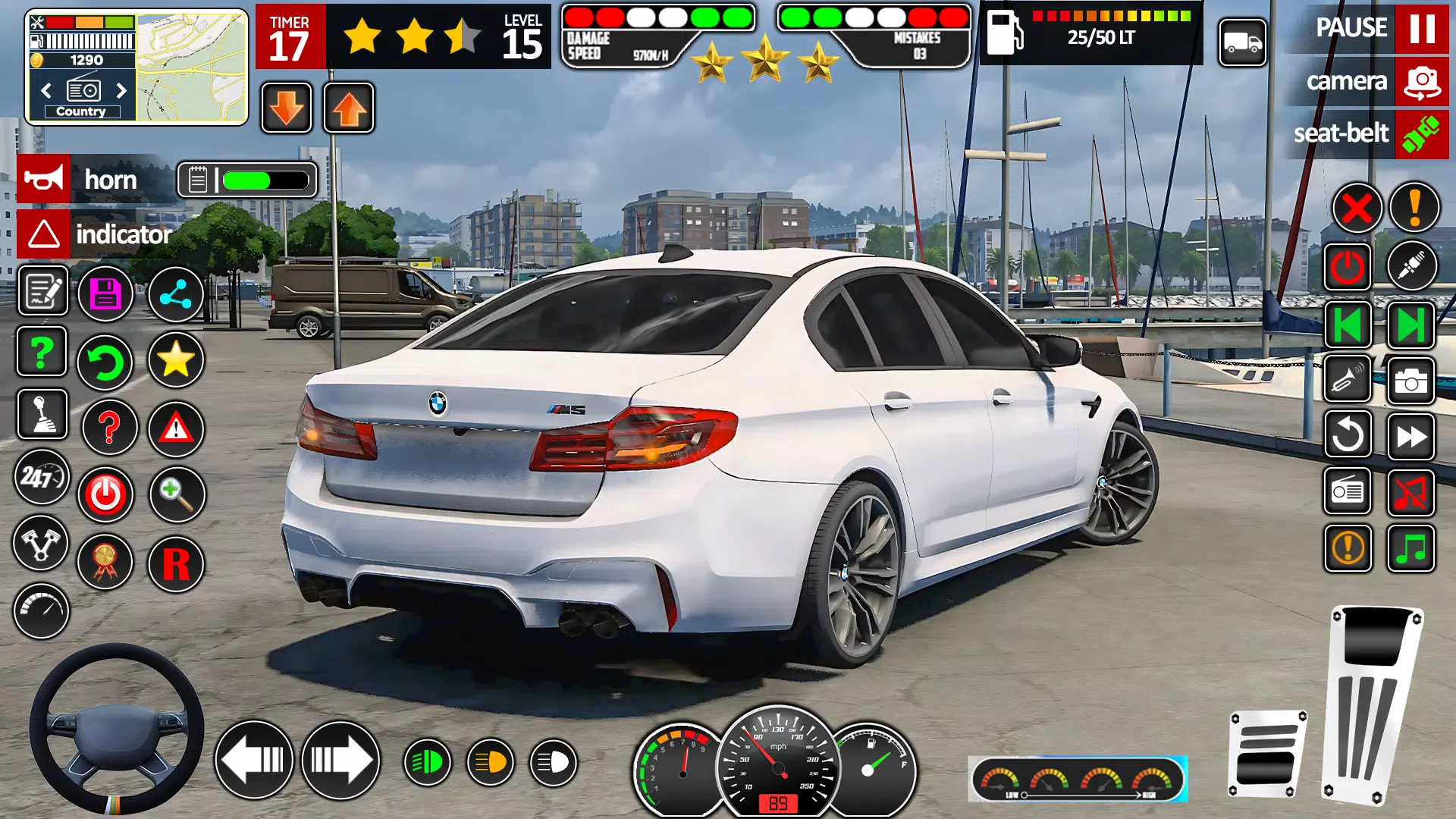
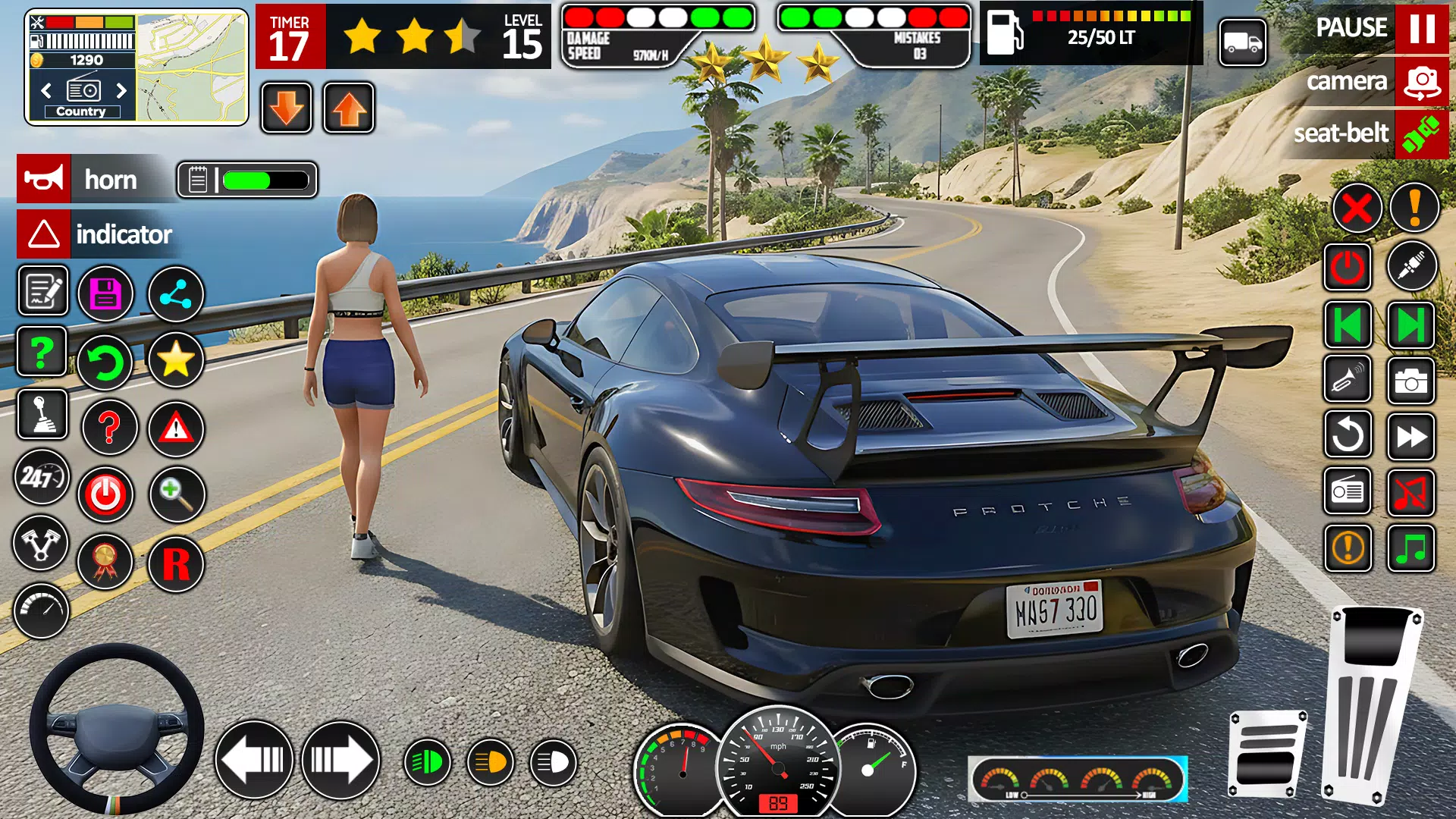

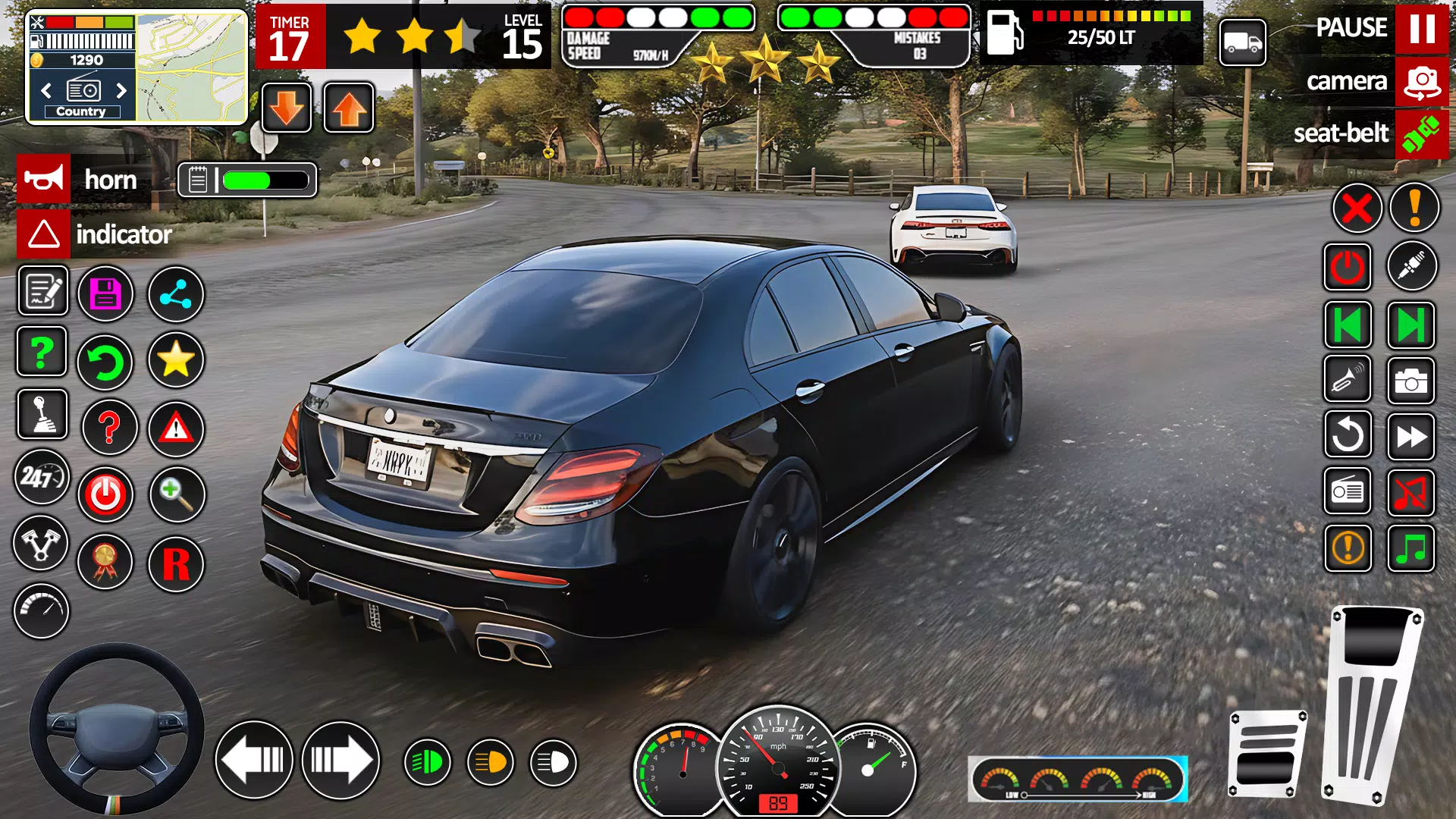
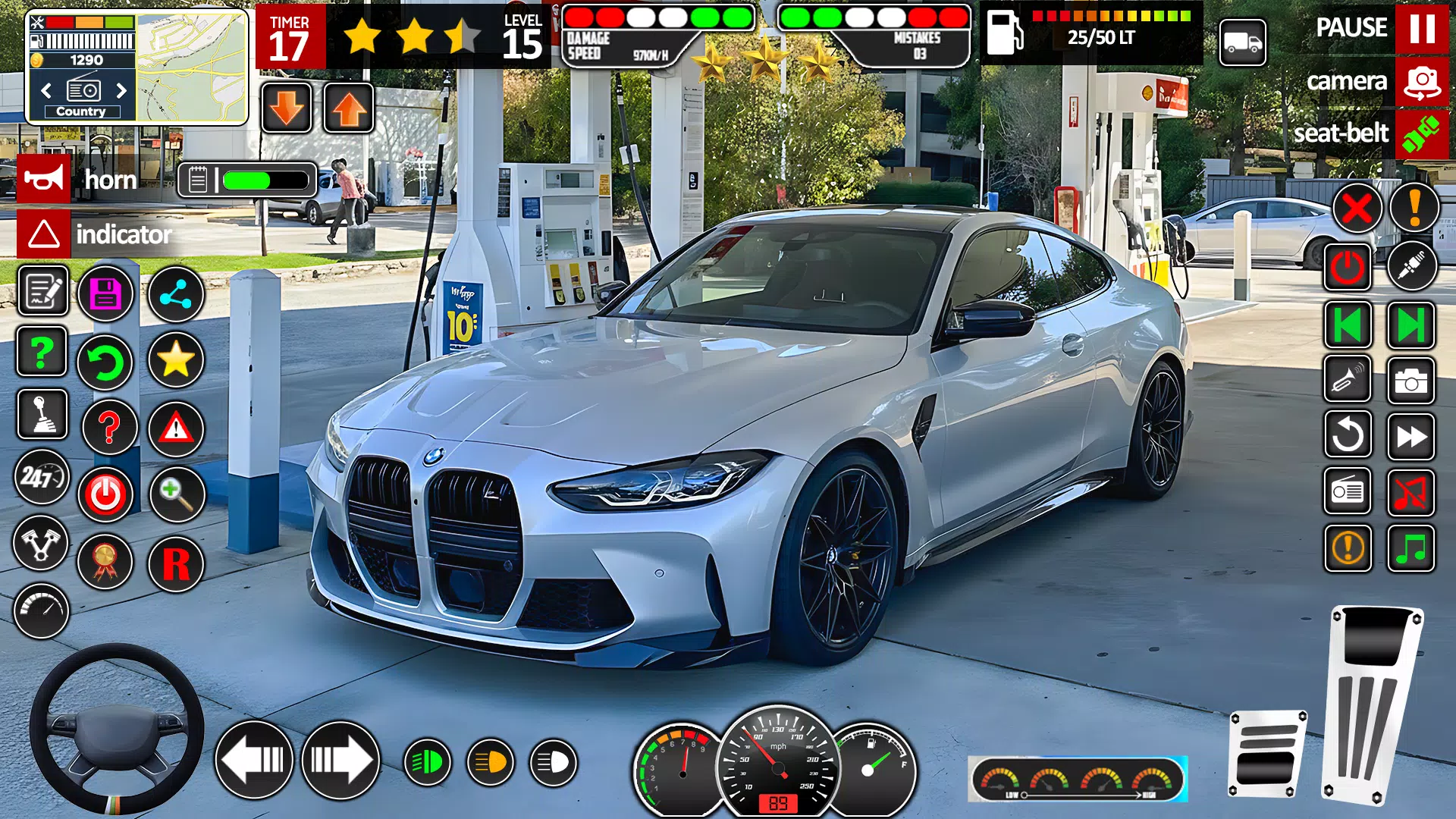
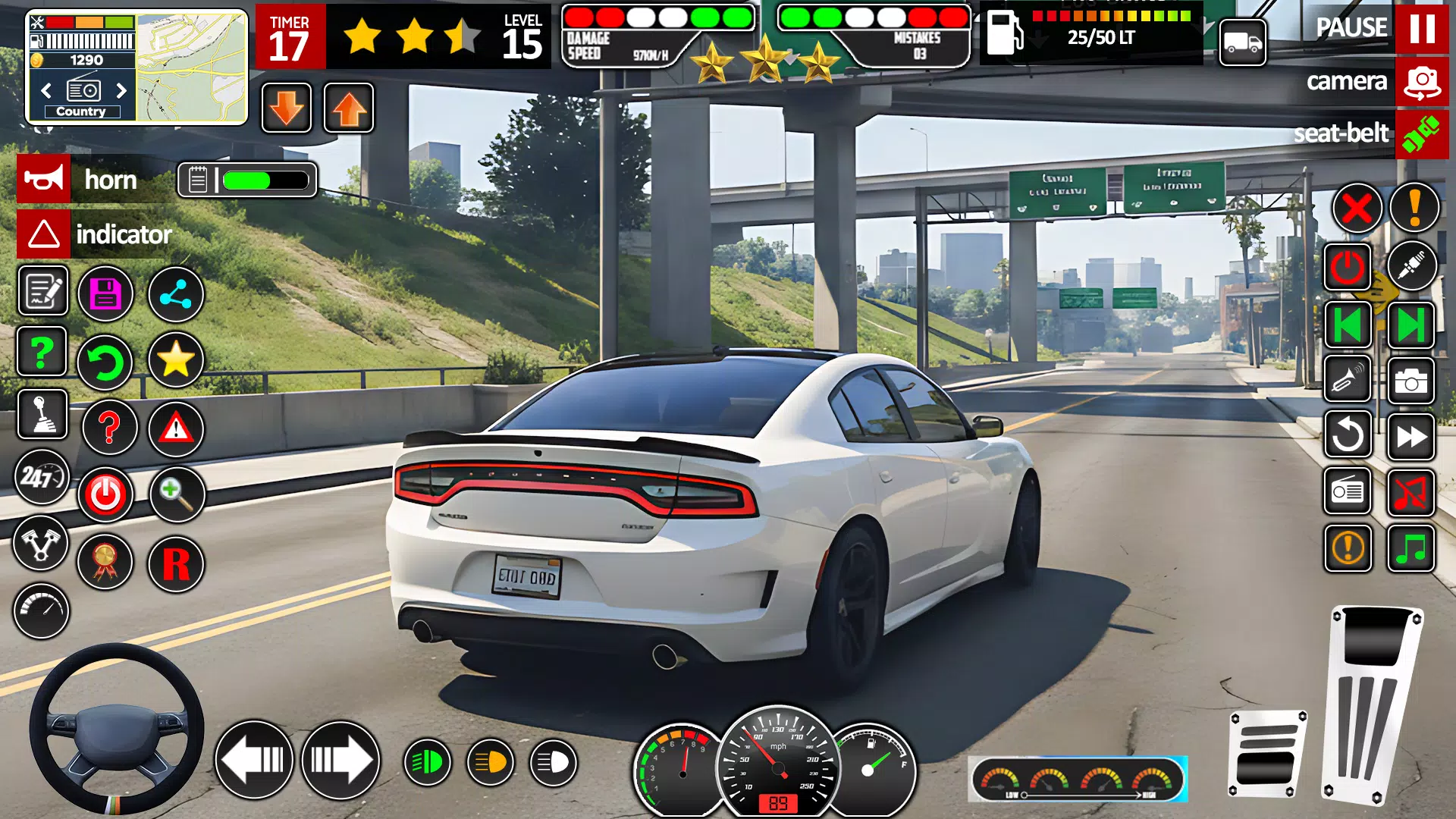
Car Driving School- Parking 3d is a focused driving simulator created to help learners practice parking techniques and basic traffic awareness in carefully modeled urban and suburban settings. From the opening missions the game emphasizes skill development over arcade-style scoring: players work through guided exercises that teach reverse parking, parallel parking and precision maneuvers needed to master tight spots. The physics model favors predictable handling and smooth input response so newcomers can concentrate on technique while more experienced players refine timing and spatial judgment.
The core gameplay centers on mission-based training sessions that replicate common parking situations encountered in everyday driving. Each mission defines a clear objective, realistic obstacles and contextual traffic rules such as yielding and stopping at intersections, so practice scenarios feel relevant and practical. Objectives vary from simple straight-in bays to angled and parallel park jobs, and success depends on vehicle placement, minimal contact with boundaries and efficient use of reverse and steering inputs. Mission design encourages deliberate maneuvers rather than frantic acceleration, reinforcing controlled approaches to problem spots.
Controls are intentionally adaptable so players can find a comfortable setup that supports learning. Touch steering and pedal controls are supported alongside alternative layouts including a virtual steering wheel and simple left/right buttons, and sensitivity sliders let you fine-tune steering responsiveness and braking feel. Driving assists are available for beginners to regulate speed and steering, while intermediate and advanced players can disable assists for a more simulation-like challenge. Clear on-screen prompts and an unobtrusive HUD keep instructions readable without distracting from the road.
The progression system unfolds through structured lessons that gradually increase in complexity, reinforcing previous skills while introducing new constraints. Early lessons focus on forward and reverse control and judging vehicle length, then add parked cars, narrower bays and angled approaches. Later stages combine elements into multi-step tests that demand planning, careful placement and consistent control under tighter tolerances. Each level is designed to leave learners with a specific takeaway—whether that is lining up for a parallel park or managing a multi-point reverse into a confined garage.
Visuals prioritize clarity and useful detail to support spatial judgment rather than flashy effects. City streets, parking garages and suburban lots are modeled with consistent cues such as curbs, lane markings, cones and signage so depth and distance are easy to assess. Lighting and camera options provide practical viewpoints for parking tasks, including hood-level perspectives, adjustable follow cameras and wider overhead angles to help players choose the view that best supports their learning.
Vehicle selection lets players practice across cars with different handling traits, simulating how turning radius and reversing behavior change with size. Typical options include compact cars, sedans and larger models; cosmetic choices for paint color and simple sightline adjustments help learners become comfortable with varied visual perspectives. These choices make it straightforward to compare how the same parking technique performs in a small hatchback versus a larger family car.
Replayability is driven by measurable improvement and varied challenge modes. Accuracy scoring, completion times and staged difficulty provide clear feedback on progress, while timed parking drills and precision-only stages where any contact with obstacles affects your score raise the stakes for focused practice. Mixed-scenario tests combine parallel parking with lane re-entry and short drive-outs to simulate real-world transitions, giving players reason to return to earlier lessons and apply refined techniques under new conditions.
The interface is designed to be straightforward and instructional so sessions feel productive and approachable. Short missions and checkpointed practice segments make it easy to learn in brief intervals, and menus highlight lesson objectives and control settings so you can pick up where you left off. Car Driving School- Parking 3d is fully playable offline, enabling consistent training without the need for a network connection and making the app a convenient companion for learners preparing for a driving test or wanting to improve everyday parking confidence.
While Car Driving School- Parking 3d provides structured, realistic practice for parking skills and reinforces awareness of traffic rules, it is intended as a training aid rather than a substitute for supervised on-road instruction. The simulator helps build clutch control, steering precision and spatial judgment, but real-world driving introduces variables and responsibilities that require professional guidance and hands-on experience with a certified instructor.