



Project ATMOSPHERE places you in 2025 as Dan, a recent graduate in Organic Robotics and Artificial Intelligence, and invites players to explore a compact, character-driven action experience that blends speculative technology with grounded decision-making. Project ATMOSPHERE is built around a single protagonist whose technical training and personal choices shape encounters, and the game aims to deliver tight, action-focused sequences alongside moments that highlight ethical and mechanical tensions in a near-future setting.
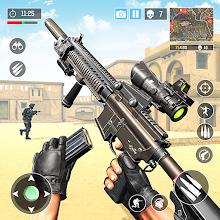
Gameplay in Project ATMOSPHERE emphasizes hands-on interaction with emergent technology and streamlined action mechanics. Touch-based controls use a virtual joystick for movement and context-sensitive buttons for combat and interaction, with optional simplified control presets for one-handed play. Encounters mix fast-paced confrontations, short tactical puzzles that require manipulating robotic systems, and environmental traversal that rewards timing and situational awareness. The control design keeps input clear so players can focus on choices and reaction rather than complex button combinations.
The progression system reflects Dan’s background by tying upgrades to research and practical application: as you complete missions, you unlock modular enhancements that alter gameplay rather than just increase raw stats. Upgrades are presented as experimental modules and software patches that can modify movement, sensing, or interaction options, creating meaningful trade-offs. Narrative progression unlocks new mission types and deeper story beats while optional objectives grant resources used to improve tools and access alternate approaches to challenges.
Project ATMOSPHERE uses a restrained near-future aesthetic that contrasts the clean, clinical interiors of research facilities with textured urban environments. Visuals favor practical detail over flashy effects, with readable HUD elements and clear visual feedback for interactive objects. Lighting and color palettes are used to signal areas of interest and mechanical risk, while an understated sound design supports the mood: subtle synthesis and environmental cues help players track robotic behavior and the consequences of their choices without overwhelming the action.
Missions are designed as compact scenarios that can be completed in relatively short sessions while still offering depth through branching objectives. Each level focuses on a core task—data retrieval, system stabilization, or containment—and integrates optional challenges that encourage replay. The structure balances linear mission flow with pockets of exploration, allowing players to approach objectives directly or experiment with tech-driven solutions. Replaying a mission with different loadouts or objectives provides alternative pacing and new tactical considerations.
Customization in Project ATMOSPHERE centers on how Dan applies his technical expertise rather than purely cosmetic options. Players configure loadouts of modules and tools that change how systems respond, enabling stealthier approaches, more direct confrontation, or puzzle-focused problem solving. Cosmetic personalization for Dan’s gear is available in modest form so players can recognize familiar setups on subsequent runs, and choices made during the story influence which options become available, reinforcing a sense of continuity between narrative and gameplay.
The game provides adjustable difficulty settings and layered challenge modes so players can tailor encounters to their preferred level of risk. Optional time trials, objective modifiers, and adaptive enemy behavior introduce fresh constraints for repeat playthroughs. Because upgrades and mission outcomes interact, replaying levels with different strategies or equipment yields different experiences, encouraging experimentation without requiring long stretches of play to notice meaningful differences.
Project ATMOSPHERE includes accessibility options aimed at broad device compatibility and player comfort, such as control sensitivity adjustments, remappable touch zones, subtitle options, and colorblind-friendly visual modes. Text size and UI scaling help maintain legibility on different screens, and a clear tutorial sequence introduces mechanics progressively so new players can pick up the basics quickly while advanced players can skip ahead to deeper systems.
The experience is designed as a single-player, offline game that runs without a network connection, making it suitable for on-the-go play. Performance settings allow players to prioritize battery life or visual detail, and the compact mission design supports shorter play sessions without sacrificing narrative or mechanical depth. Load times and resource usage have been considered so the game remains responsive across a broad range of devices.
Project ATMOSPHERE stands out as a focused, character-led science fiction action game that uses its near-future premise to explore technical trade-offs and ethical questions through gameplay. By centering on Dan’s expertise in organic robotics and AI, the game keeps the experience intimate and mechanically consistent while offering enough systems and replayability to reward experimentation and thoughtful play.