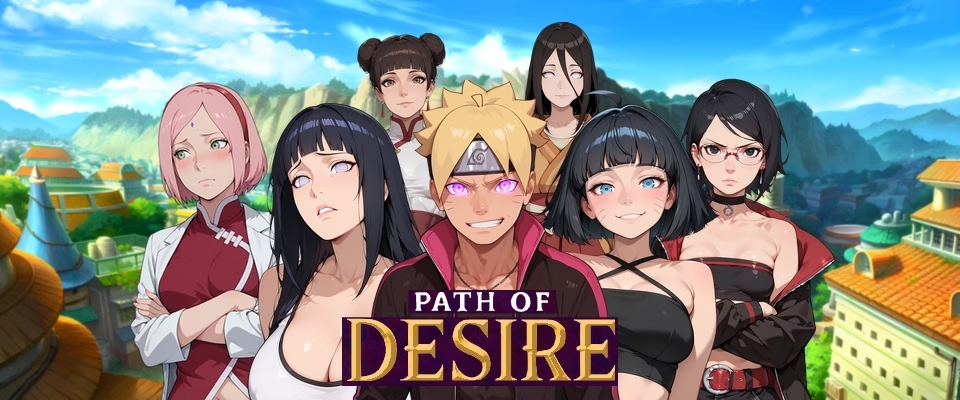
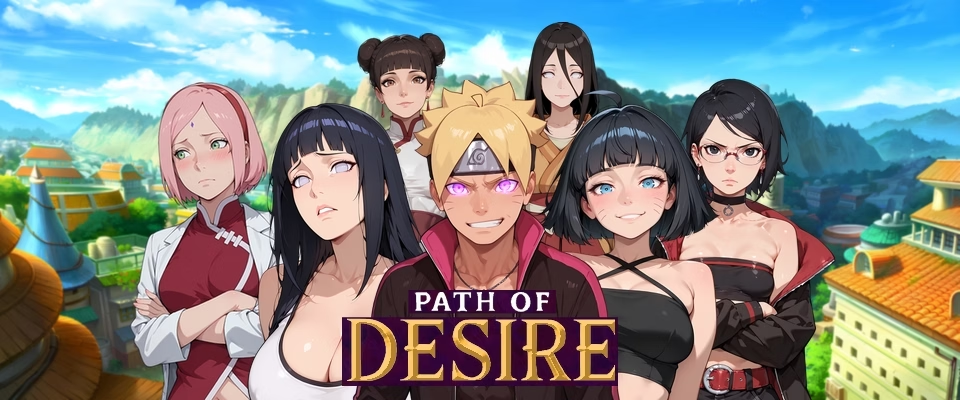









Path of Desire: Cursed Chakra is a narrative-driven visual novel that follows Boruto after a late-night encounter unlocks a cursed power that amplifies desire and changes how characters respond to each other. Path of Desire: Cursed Chakra emphasizes consequence and interpersonal dynamics, asking players to engage with morally complex choices and timing rather than fast-paced combat or arcade-style challenges.
The game centers on a responsive narrative engine that tracks choices, timing, and relational context to produce branching scenes and divergent outcomes. Characters react not only to what you choose but to when and how you choose it, creating ripple effects that alter dialogue, unlock new scenes, and sometimes close off entire story paths. The cursed chakra functions as a consistent storytelling element that modifies social behavior and creates ethically ambiguous situations; the design keeps the focus on consequence and character development while treating mature themes in a measured, informational tone.
Gameplay is primarily story-driven and choice-based. Scenes are delivered as scripted interactions with branching dialogue, conditional responses, and occasional timed prompts that raise pressure and urgency. An internal state system records decisions and adjusts future options, so early moments can have long-term narrative consequences. Rather than leveling or stat grinding, progression depends on reaching narrative milestones and exploring optional scenes that reveal backstory and character motivations. This structure rewards careful reading, empathy, and attention to nuance.
Controls are optimized for touch devices: tap to advance text, long-press to review recent choices or examine context, and simple swipe gestures to move between scenes or access chapter menus. The progression system is chapter-based with decision points that mark clear narrative beats; completing a chapter advances the main arc while optional interludes let players deepen relationships or gather additional information. Multiple save slots and a comprehensive choice-history log let players revisit and experiment without losing progress, and the interface makes it straightforward to jump back to earlier decision points for alternate outcomes.
The visual presentation uses an anime-influenced aesthetic with cinematic framing, moody lighting, and subtle animations to convey emotional shifts. Close-ups, camera-like composition, and selective emphasis on facial expressions and gestures help focus attention during tense moments. The structure is episodic: self-contained scenes and chapters that form a larger narrative arc. Each chapter raises stakes and introduces new dilemmas, while quieter interludes provide space for character reflection and relationship building, supporting a slow-burn pacing that favors tension and emotional realism over action set pieces.
Customization is expressed through narrative choices and relationship paths rather than through cosmetic or stat systems. Players shape Boruto’s personality and reputation through decisions that affect how other characters respond, producing a personalized story each playthrough. Multiple endings, intermediate branches, and optional scenes encourage replaying to see alternate consequences and to observe how different priorities change later opportunities. Because some choices permanently alter available content, the design rewards experimentation across several playthroughs to uncover hidden arcs and varied character reactions.
The user interface prioritizes readability: adjustable text size, clear contrast, and configurable dialogue pacing make the story accessible in different environments. Subtitles, a full transcript feature, and content warnings appear where themes are intense, giving players control over their experience. The choice-history and chapter navigation tools make it easy to review past decisions, and straightforward touch controls keep interactions intuitive so the narrative remains the central focus for a wide range of players.
Path of Desire: Cursed Chakra is designed to work offline once installed, allowing uninterrupted play without a network connection. The challenges are narrative in nature—timed decisions, moral dilemmas, and the management of relationships and reputation create tension without relying on traditional difficulty meters. These systems reward attention to detail, emotional nuance, and strategic thinking about how present choices affect future options, providing meaningful stakes through story consequences rather than combat difficulty.
Path of Desire: Cursed Chakra will appeal to players who prefer character-driven drama, ethical complexity, and gradual narrative tension. The experience asks for engagement with consequences and interpersonal realism, and it presents mature themes in a restrained, informational way rather than through explicit content. Players seeking fast-action gameplay may find the pace contemplative, while those interested in branching stories, layered character work, and replayable narrative paths will discover a detailed, choice-rich experience to explore across multiple sessions.