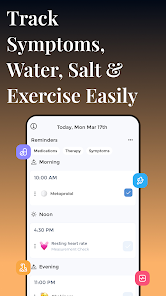
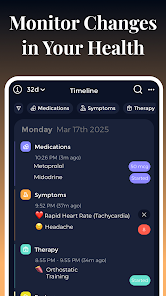
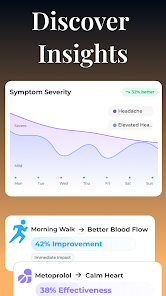
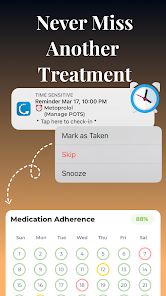
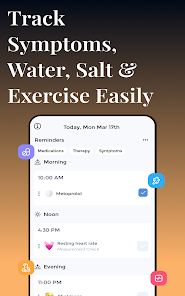
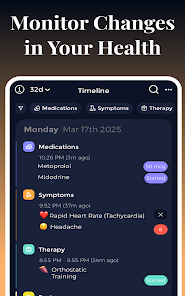
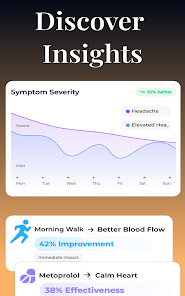
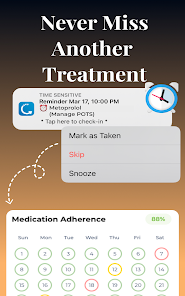
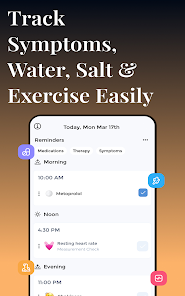
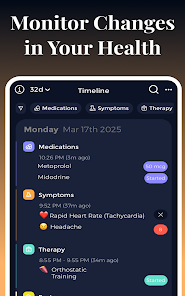
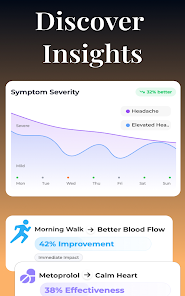
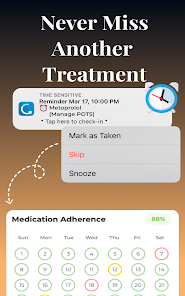
POTS Tracker is a focused health app that helps people with Postural Orthostatic Tachycardia Syndrome monitor symptoms, heart rate, blood pressure, and triggers across daily routines. It combines simple logging, visual trend charts, medication reminders, and exportable reports to streamline symptom tracking for patients and clinicians.
POTS Tracker is designed to convert scattered notes and sporadic readings into actionable data. The app centers on consistent symptom logging, timeline visualization, and exportable summaries that can be shared with care teams. Its lightweight design keeps the core workflows quick while still offering layered detail when you need it.
The app focuses on supporting day-to-day self-management without overwhelming the user. Key functions include:
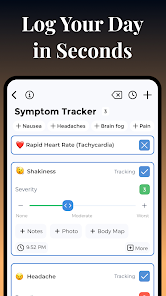
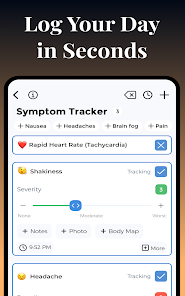
Using POTS Tracker involves short, repeatable steps. Open the logging screen, enter current vitals and symptom ratings, tag the context (e.g., postural change, meal, stress), then save. Over days and weeks the visualizations highlight patterns such as time-of-day flares, medication gaps, or activity triggers. This structure reduces guesswork during clinical visits.
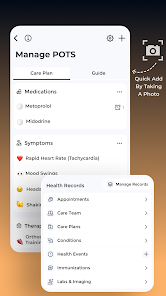
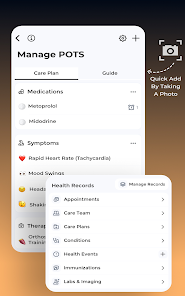
The app allows you to tailor the experience to your routine. Create custom symptom categories, adjust severity scales, and configure reminder schedules. Users can choose which metrics appear on the home screen and set thresholds that trigger color-coded alerts on charts. These options help make POTS Tracker fit diverse management plans.
Designed for quick data entry, the interface prioritizes legibility and minimal taps. Large buttons, clear labels, and one-tap templates speed up logging when symptoms are acute. Graph rendering is smooth on modern devices, and the app includes battery-friendly sync options so background activity doesn’t drain power during long monitoring periods.
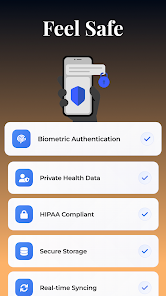
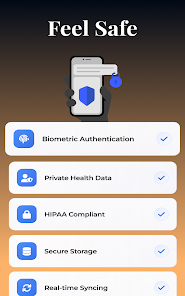
POTS Tracker keeps local logs with encrypted export options. Users control sharing and can generate concise reports for clinicians without uploading raw data to third-party servers. Backup and restore functions use common file formats so you can move records between devices securely.
Start with a two-week baseline: record entries at consistent times to build a reliable dataset. Use the tagging feature to capture context—standing, meal, medication, or stress—and enable reminders for key actions like drinking water or taking salts. Pair the app with a reliable heart-rate monitor for more accurate trend detection.
Before appointments, export a summary focused on the timeframe your clinician requests. Highlight repeated patterns and attach notes that describe subjective experiences such as lightheadedness or cognitive fog. The visual charts often communicate trends faster than verbal descriptions, making consultations more efficient.
People who track symptoms regularly report that the app reduces anxiety around unpredictable episodes by providing context and evidence. The combination of reminders and templated entries helps maintain consistency, while exportable reports create clear records for diagnosis or treatment adjustments.
Install the app, allow basic permissions for notifications and local storage, then set up a quick profile with your baseline vitals. Configure one or two daily reminders and add a few custom symptom tags that reflect your experience. Within days you’ll begin seeing trends that inform simple behavior changes or questions to bring to your care team.
POTS Tracker brings focused monitoring tools into a compact, user-friendly package. With consistent use it supports clearer self-management, more productive medical appointments, and a clearer picture of how daily life affects symptom patterns.