

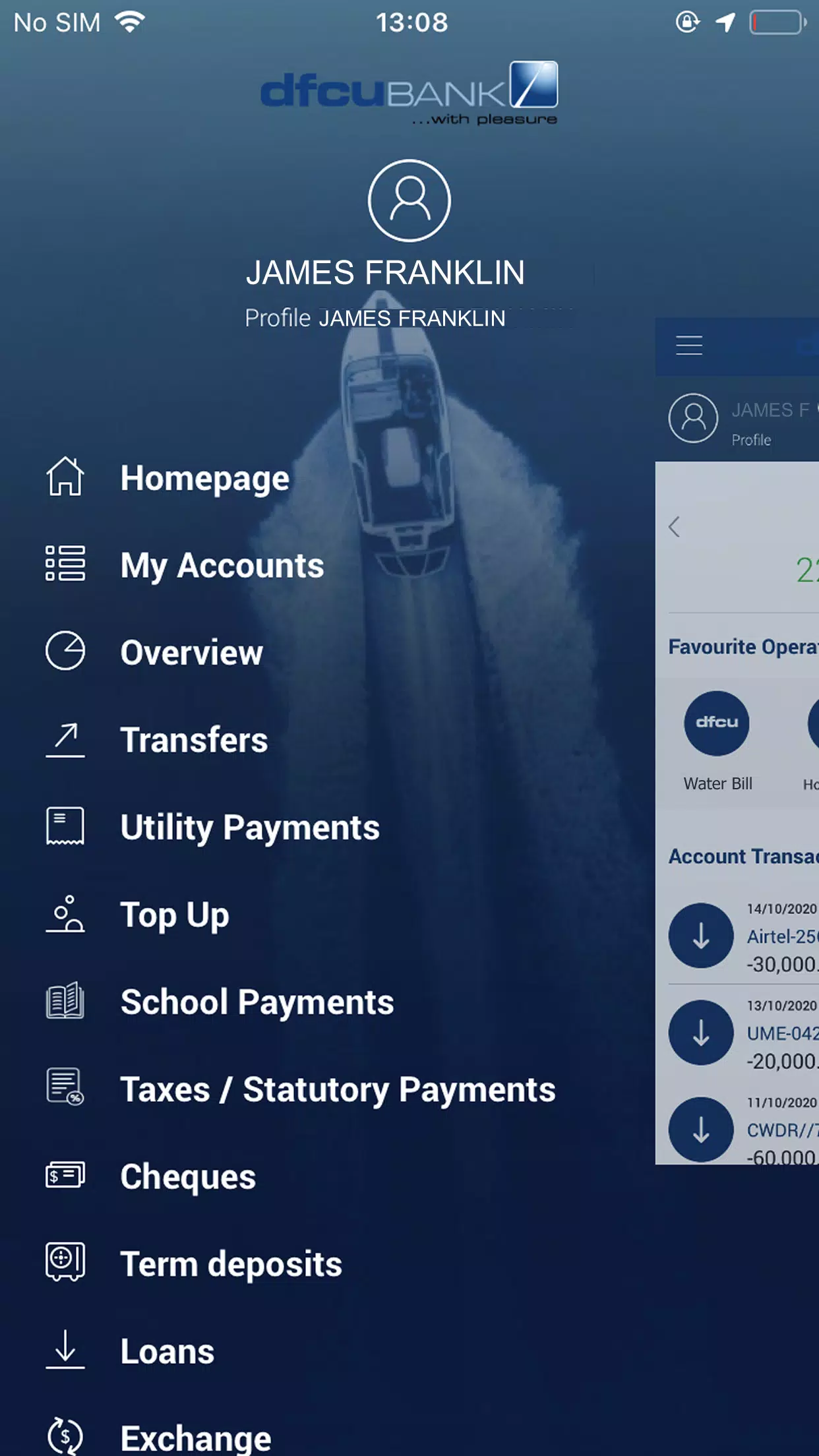
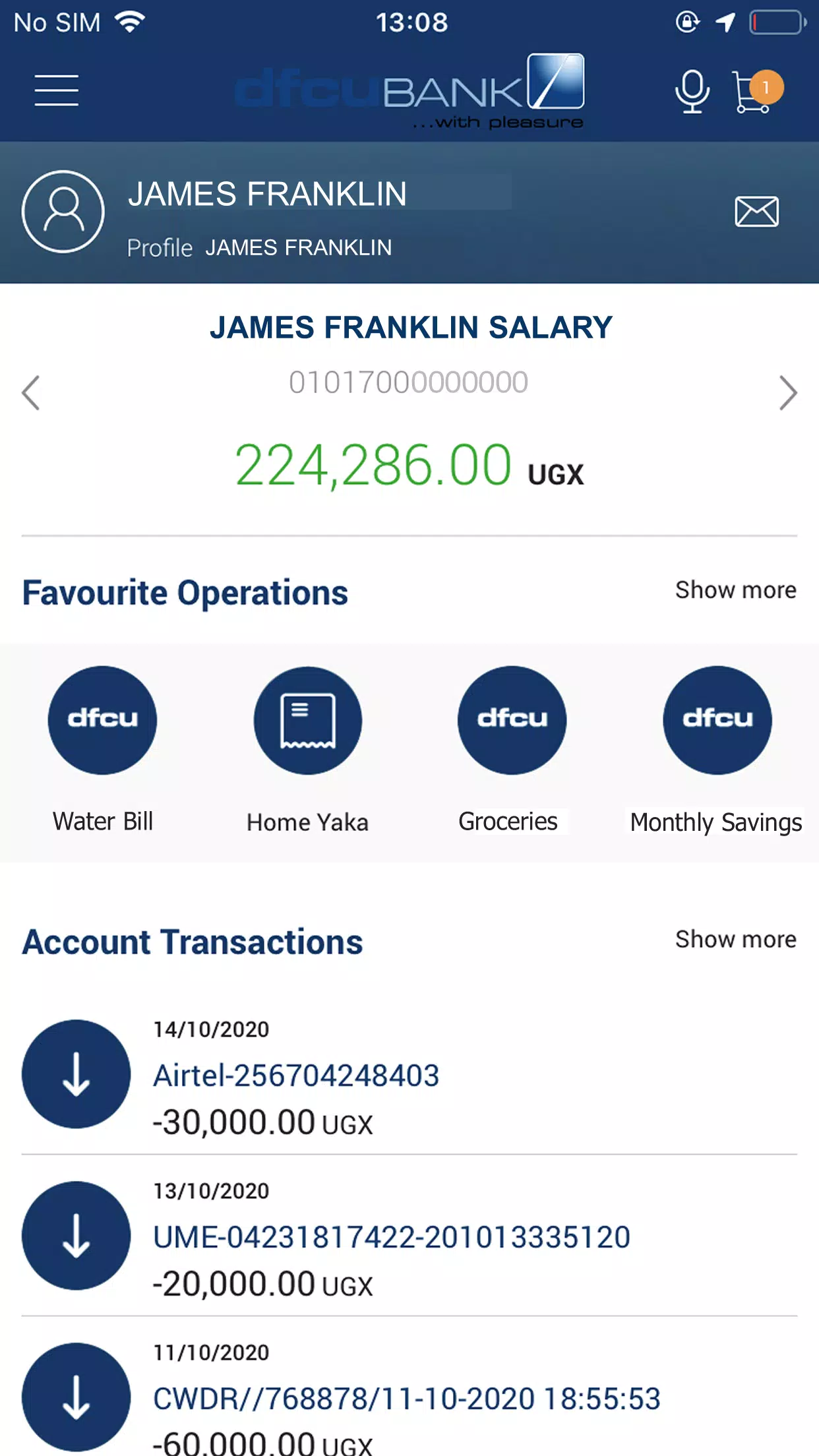

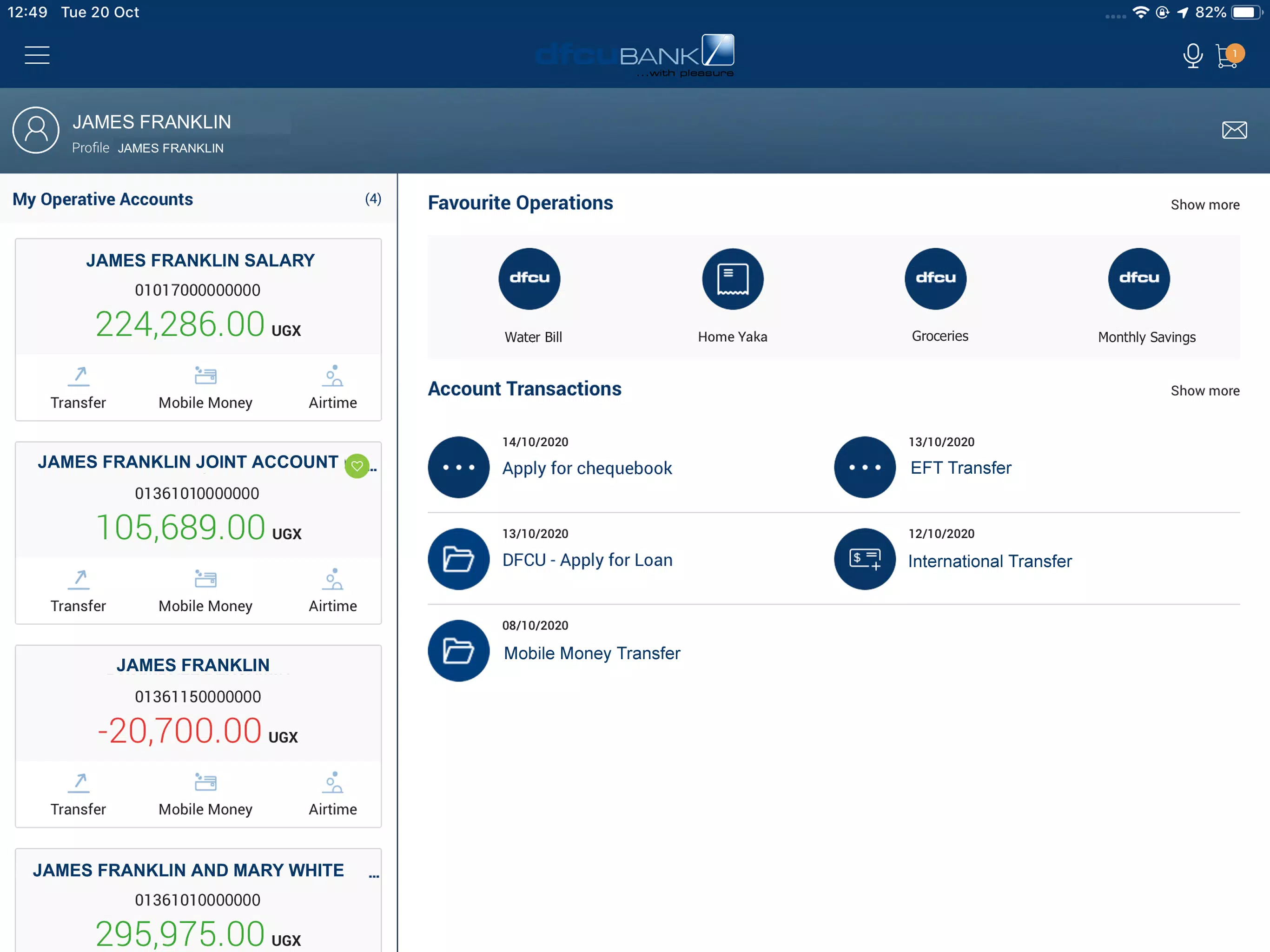
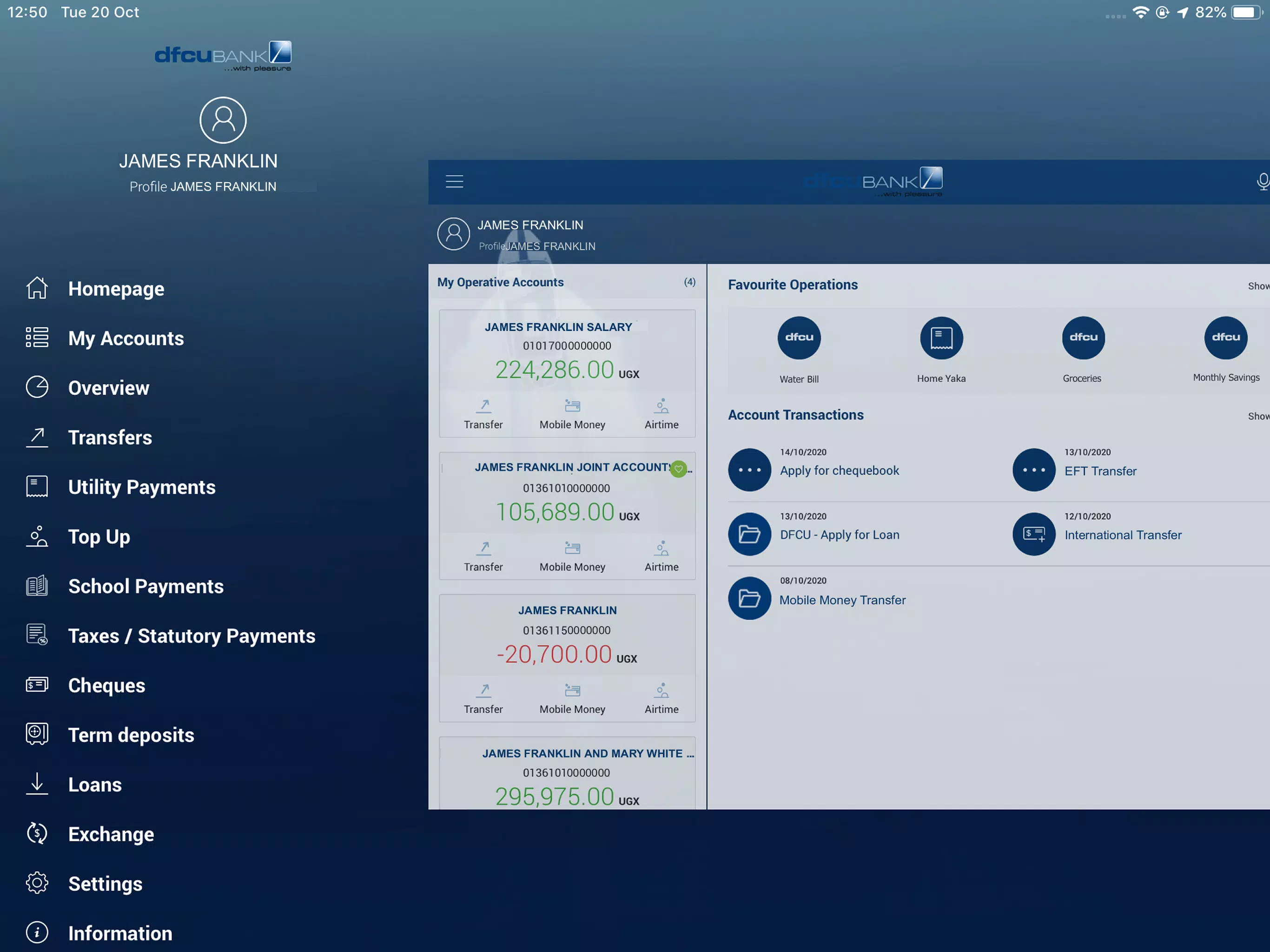

dfcu QuickApp is a compact mobile utility designed to speed up access to everyday services and practical tools by reducing the number of taps required for common actions. The app centers on a streamlined interface where shortcuts and simplified menus surface tasks you use most often, delivering predictable workflows and a focused toolset for users who prefer quick, reliable interactions. Built for people who value time-saving access rather than feature-rich complexity, dfcu QuickApp groups core functions behind clear navigation and straightforward controls so routine mobile tasks feel faster and less distracting.
The core design of dfcu QuickApp emphasizes fast entry points and low friction: a configurable home area holds your top shortcuts, simplified menu layers move frequently used actions within two taps, and a minimal layout keeps the visual noise down. Security options include PIN and biometric authentication to protect access to sensitive tools, while push notifications provide timely reminders without overwhelming the interface. The app is intentionally lightweight to support quick launch times and modest storage and memory use; several practical tools and recently used items are cached locally to improve responsiveness even when connectivity is limited. Customization is deliberately conservative — you can rearrange or pin shortcuts and choose a compact versus expanded view — reflecting the app’s aim to stay simple rather than present an extensive preference panel.
Navigation relies on direct touch targets and a small set of predictable gestures so actions can be completed with minimal learning. First-time users encounter an onboarding flow that highlights the main shortcut areas and explains authentication choices; contextual hints appear when the app detects repeated patterns, helping you form faster habits without intrusive prompts. Core tasks are grouped by purpose in clear modules so you can jump from one routine action to the next, and the app keeps a short history of recent tasks to make repetition faster. There are no complex configuration trees: the idea is to let the app be a quick, reliable conduit to the services and tools you need most.
The visual style favors clean typography, generous spacing, and high-contrast elements to support legibility in different lighting conditions. Tap targets and navigation elements are sized with accessibility in mind to reduce mis-taps, and the app is compatible with common screen reader technologies so users who rely on assistive tools can navigate the shortcut areas and menus. Text resizing and simplified layout modes help accommodate users who prefer larger or denser displays; these adjustments preserve the app’s quick-access philosophy without adding clutter. Notifications and prompts are concise and actionable to keep the experience efficient for people who use the app frequently throughout the day.
Designed for small footprint and fast startup, the app minimizes background processing and network dependence for core tasks. Where appropriate, dfcu QuickApp caches key items such as recent entries and lightweight tools so basic functionality remains available offline; this makes it practical for use in low-connectivity environments. Background updates are minimal and prioritized to avoid draining battery or using excessive data, and the app reports straightforward status messages when network-only functions are unavailable so users understand when to expect full behavior.
Instead of level-based progression, dfcu QuickApp offers a gradual productivity progression: as you use the app, frequently used shortcuts are easier to access and the onboarding hints adapt to your pattern of use, effectively shortening the time to complete common tasks. Customization is focused and purposeful rather than extensive: you can pin, unpin, and reorder shortcuts; select compact or expanded presentations of a tool; and opt in or out of notification types. This restrained customization supports long-term daily use by keeping the interface predictable and uncluttered, which increases the likelihood that users will return to the app for routine tasks.
dfcu QuickApp speeds up routine interactions by reducing taps and concentrating the most useful functions within an easy-to-scan layout, making it a good fit for users who want a dependable productivity companion. The lightweight architecture and local caching help maintain responsiveness on modest devices and in intermittent network conditions. On the other hand, the app intentionally omits advanced configuration and extensive feature sets found in full-service apps, so power users who need deep customization or every possible tool may find it limited. Notifications and authentication choices are designed for practical security and convenience rather than enterprise-grade management features.
Overall, dfcu QuickApp is a pragmatic, easy-to-learn utility for people who want to shave seconds off repeated mobile tasks and keep a focused workflow without the overhead of larger, more complex applications.