Old Egyptian Calendar is a thoughtfully designed reference and utility app that reconstructs Nile-era timekeeping while fitting into modern schedules. The Old Egyptian Calendar places ancient month names, festival dates, and astronomical markers alongside today’s Gregorian dates so users can quickly compare timelines, set reminders, and read concise historical notes without flipping through academic texts. This editor-grade introduction highlights how the app blends scholarship and practical tools for students, teachers, travelers, and curious learners.
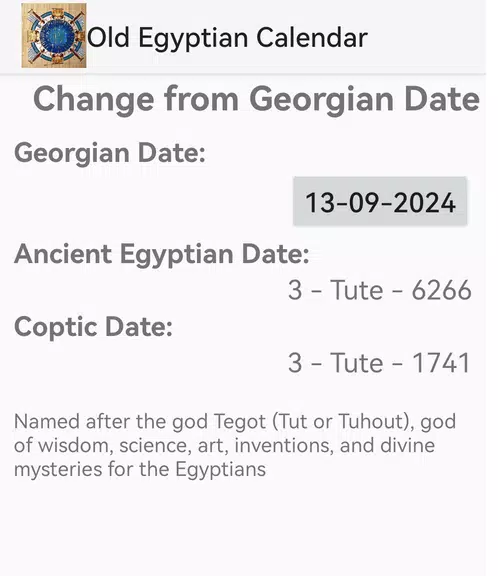
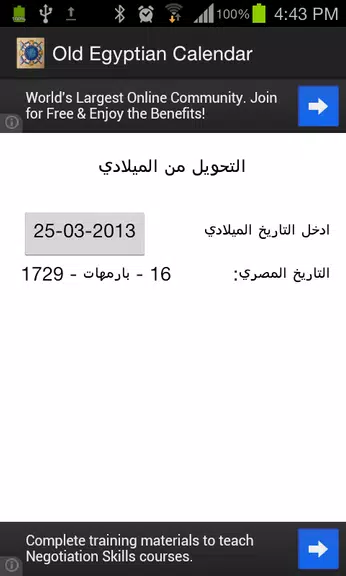
The app converts modern dates into classical Egyptian equivalents so you can see day names, month designations, and seasonal placement at a glance. Festival entries are organized with short descriptions and contextual notes that explain why a particular day mattered in civic and agricultural life. Astronomical markers such as heliacal risings and relevant lunar-phase annotations are shown where appropriate, allowing a quick interpretation of how sky events influenced timing. Reminders, optional device-calendar sync, and offline access make these features useful for everyday planning as well as study.
Navigation is built around a central interactive timeline and a month-by-month view. Swipe gestures move through months and seasons, taps open detailed entries, and long-press actions add reminders or create quick notes tied to a specific day. Toggle controls switch between descriptive and concise modes, and simple on-screen filters let you show or hide festivals, astronomical notes, or civic observances. These mechanics are intentionally lightweight so the learning curve is short while the interface remains responsive on mid-range devices.
Rather than a game-like progression, the app provides a learning progression that guides users from overview to depth. New users are encouraged to follow the quick tutorial and start with the timeline to see how months and seasons relate. As you explore, descriptive mode reveals expanded historical context and cross-references to archaeological sources; switching back to concise mode compresses the material into study-friendly summaries. Persistent bookmarks and a personal notes area let learners track topics to revisit, creating a natural progression from basic familiarity to targeted research.
The visual design adopts a clean, museum-style aesthetic that prioritizes legibility and scholarly tone. Calendar grids, diagrams, and short paragraphs are laid out with ample white space so text remains the focus. Color themes are designed for different lighting conditions and reading preferences, with a high-contrast option for clarity and a subdued palette for extended study sessions. Animations are understated to preserve context and make page transitions feel smooth rather than distracting.
Information is grouped by the three principal Egyptian seasons—Akhet (inundation), Peret (emergence), and Shemu (harvest)—with each season divided into four months. Each month page contains a compact calendar grid, a concise description of the month’s significance, and links to festival entries and astronomical notes. Cross-references are provided where archaeological or astronomical explanations clarify why specific dates were important, so users can follow the chain of evidence without needing external sources.
Users can personalize their experience by choosing between descriptive and concise reading modes, selecting color themes, and adjusting text size for readability. Notification settings allow alerts for chosen festivals, seasonal transitions, or personal study reminders. Offline data download ensures the core conversion logic and content remain available without internet access, and exportable notes make it easy to save observations for offline research or classroom use.
The app aims to be accessible: adjustable font sizes, high-contrast themes, and clear labeling of interface elements support screen reader compatibility. Performance is tuned to feel responsive on a wide range of devices; pages load quickly and animations are conservative so users on older hardware still get a smooth experience. Offline-first design means the principal functions are usable in fieldwork settings or when traveling to areas with limited connectivity.
Students and educators can use the Old Egyptian Calendar for lesson planning, timeline exercises, and quick reference during lectures. Hobbyist astronomers will find the heliacal rising annotations useful for correlating sky events with seasonal change. Travelers and cultural researchers can preview seasonal festivals before visiting museums or archaeological sites. The replay value comes from exploring different years, toggling display modes, and revisiting bookmarked topics as your understanding deepens.
Installation is straightforward; after the first launch the quick tutorial demonstrates date conversion, timeline navigation, and filter controls. Try the demo mode to explore sample entries without enabling sync, and enable offline data before traveling. If you use reminders, grant notification permission so alerts fire reliably. Reviewers and educators frequently praise how the app balances clarity with source-aware notes, making the Old Egyptian Calendar a practical companion for both casual exploration and more structured study.