
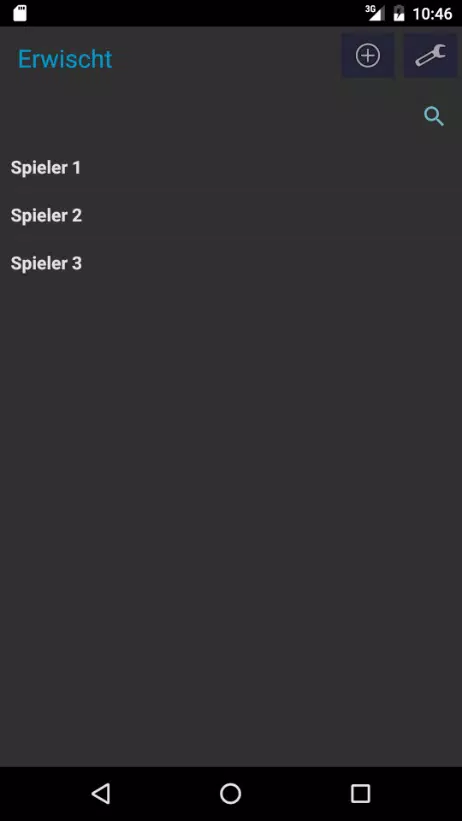
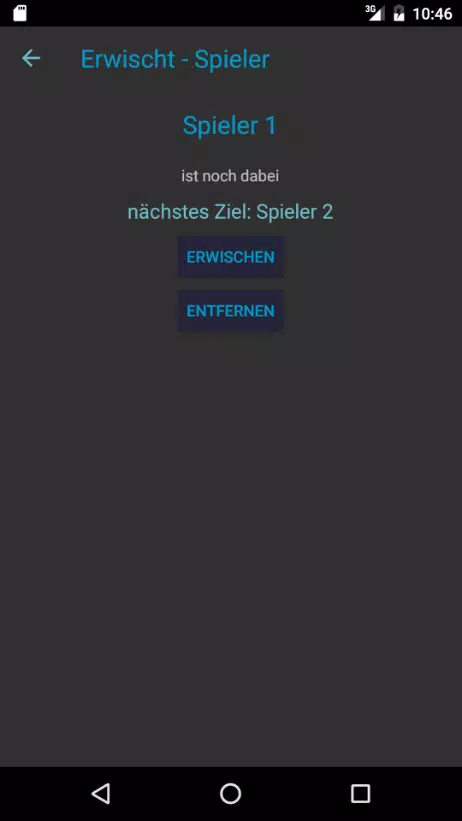
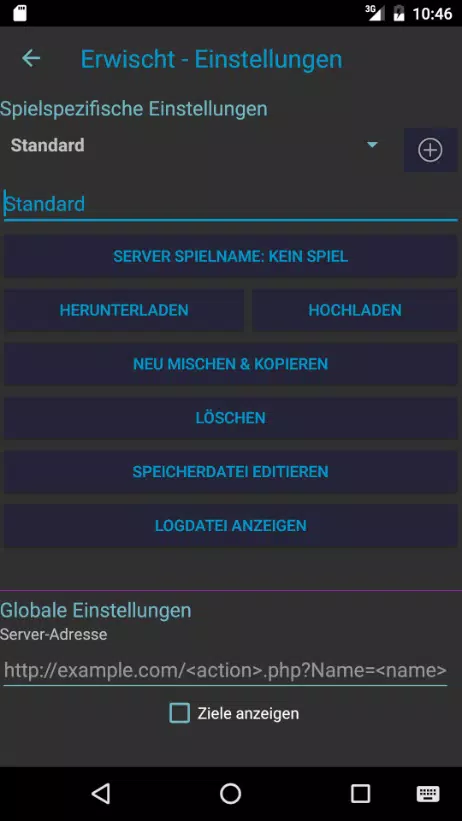
Erwischt is a practical event-planning app that helps organizers design and run structured group activities for camping trips, school outings, or corporate retreats. Erwischt focuses on clear workflow and adaptable scenarios so hosts can create task-based challenges, assign roles, and monitor progress without a steep learning curve. With straightforward controls and reliable offline support, Erwischt is built to work in remote outdoor settings where connectivity is limited.
The app provides a guided scenario builder that walks organizers through creating an activity from start to finish: define an objective, add sequential or parallel tasks, set time limits, and attach optional educational prompts. Templates speed up setup for common formats such as scavenger hunts, skills circuits, or problem-solving stations, and organizers can save customized templates for reuse. A single dashboard gives quick access to task lists, participant assignments, and an event timeline so hosts can see the full structure at a glance.
Erwischt’s mechanics are intentionally simple: tasks can be marked as checkpoints, puzzles, physical challenges, or discussion prompts, and each task accepts parameters like duration, completion criteria, and whether it advances an individual, team, or whole-group progression. The interface supports drag-and-drop reordering, inline editing of task descriptions, and clear visual timers to manage pacing. Controls are touch-optimized for tablets and phones, and common actions are kept one or two taps from the main screen to minimize distraction during live events.
Progression is organized around scenarios and stages rather than abstract XP or leveling. Organizers can chain tasks into stages, award completion badges or simple point tallies, and configure branching paths so teams follow different routes based on earlier outcomes. Challenge difficulty is adjustable through task parameters and optional hints; this makes it easy to scale an activity for mixed-age groups or differing skill levels while preserving a balanced sense of achievement and competition.
The app uses a clean, utilitarian aesthetic that emphasizes readability in outdoor light conditions: high-contrast text, large buttons, and modular cards for tasks and stages. Level structure follows a linear or branching map view, allowing hosts to see how tasks connect across an event. Visual cues identify overdue tasks, active timers, and completed checkpoints, so organizers can quickly spot bottlenecks or areas that need intervention during an event.
Erwischt encourages reuse by letting organizers customize templates, rename roles, and attach resource files such as PDFs or image hints to tasks. Replay value comes from interchangeable task sets, randomizable clue orders, and adjustable difficulty, which means the same basic scenario can be refreshed for different groups without rebuilding from scratch. Saved templates can be shared offline as files between devices, making it simple to adapt a proven format for a new audience.
The experience emphasizes clarity: onboarding introduces the core flow in a short walkthrough, and contextual help appears where new organizers typically need it. Accessibility options include scalable text sizes and high-contrast modes to support visibility in bright outdoor environments. Task descriptions support concise language and optional extended notes for assistants or co-organizers who need more detail behind a scene.
Offline operation is a core strength: all scenario data, timers, and progress trackers operate locally on the device so events continue smoothly without a network. When participants are unable to sync or connect, organizers can collect results manually and update the dashboard; the app is designed so intermittent connectivity simply pauses nonessential features rather than breaking an active event. Local export and import functions let teams exchange saved scenarios via file transfer or direct device-to-device sharing.
Erwischt is primarily an organizer-centric tool: it assumes a host will design scenarios and manage flow, so single-player or purely pass-and-play cases are limited. Some real-time collaborative features are intentionally minimal to preserve offline reliability, and organizers should plan for manual collection of results if participants cannot easily report progress. Despite these trade-offs, the app remains a dependable choice for groups that need structured, portable activity management in varied outdoor settings.