
KAMU -lääkehaku is a Finnish medication search tool designed for athletes, coaches and sports medical staff who need a quick and reliable way to check whether prescription and over-the-counter medicines align with anti-doping rules. The app gives clear pass/fail status on individual products, explains how administration route changes classification, and highlights multi-ingredient preparations when any component is prohibited, while reminding users that this information is for guidance and should be confirmed with official authorities.
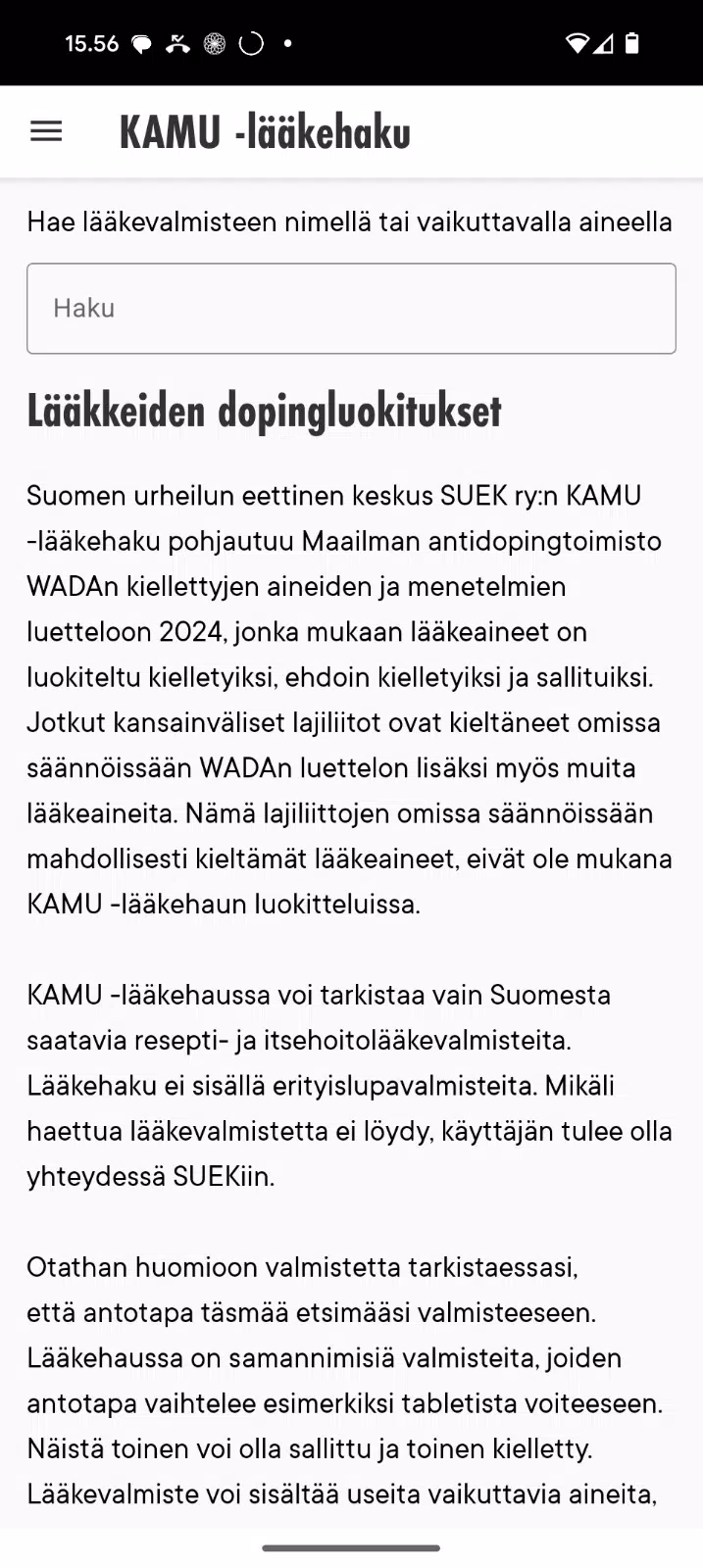
KAMU -lääkehaku focuses on medicines marketed in Finland and presents results in a compact product view that explains the prohibited status and the rationale behind it. The database lists active ingredients, indicates permitted or banned status per route of administration, and flags combinations where one ingredient alters the legal standing of the entire product. Results include short references so users can see which rule or class influenced the classification and what to do next when a product is missing or unclear.
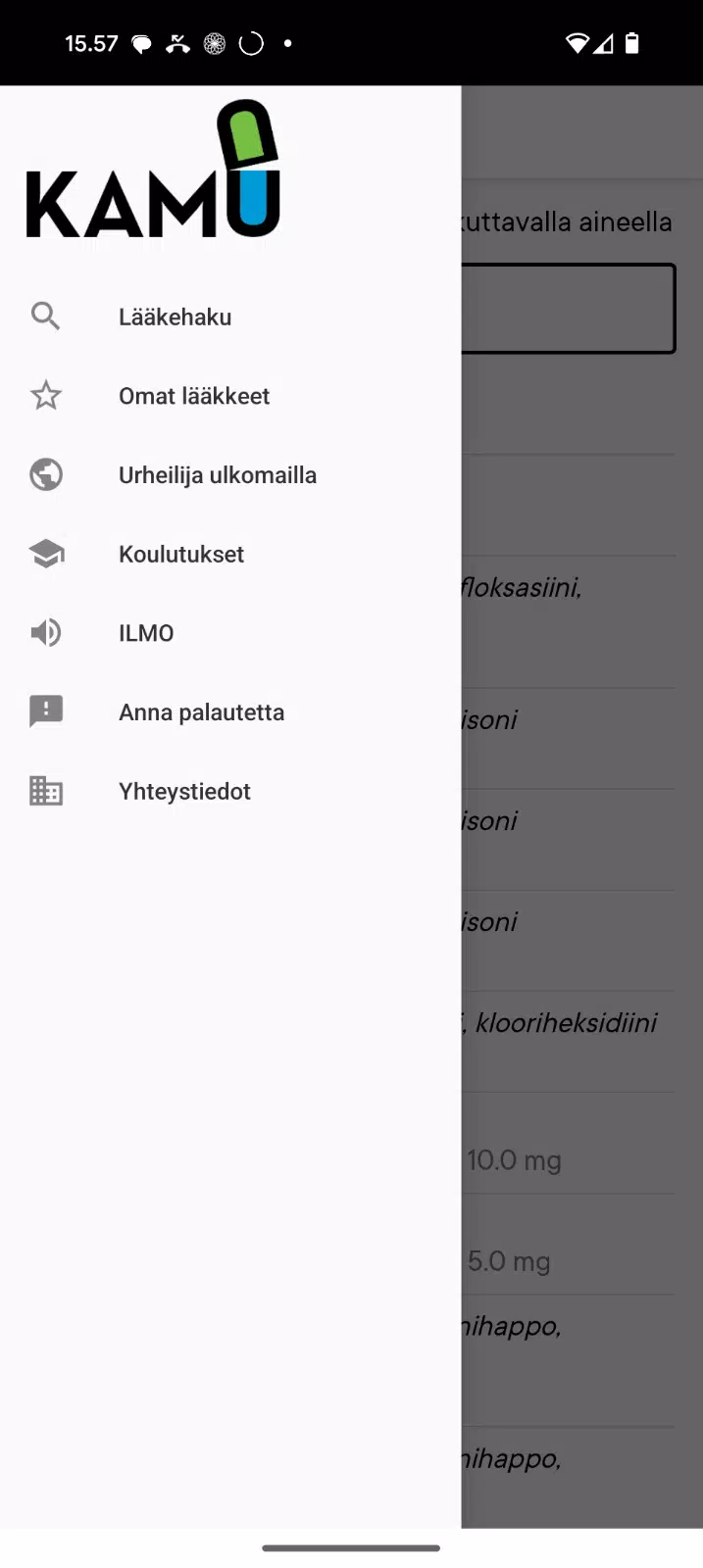
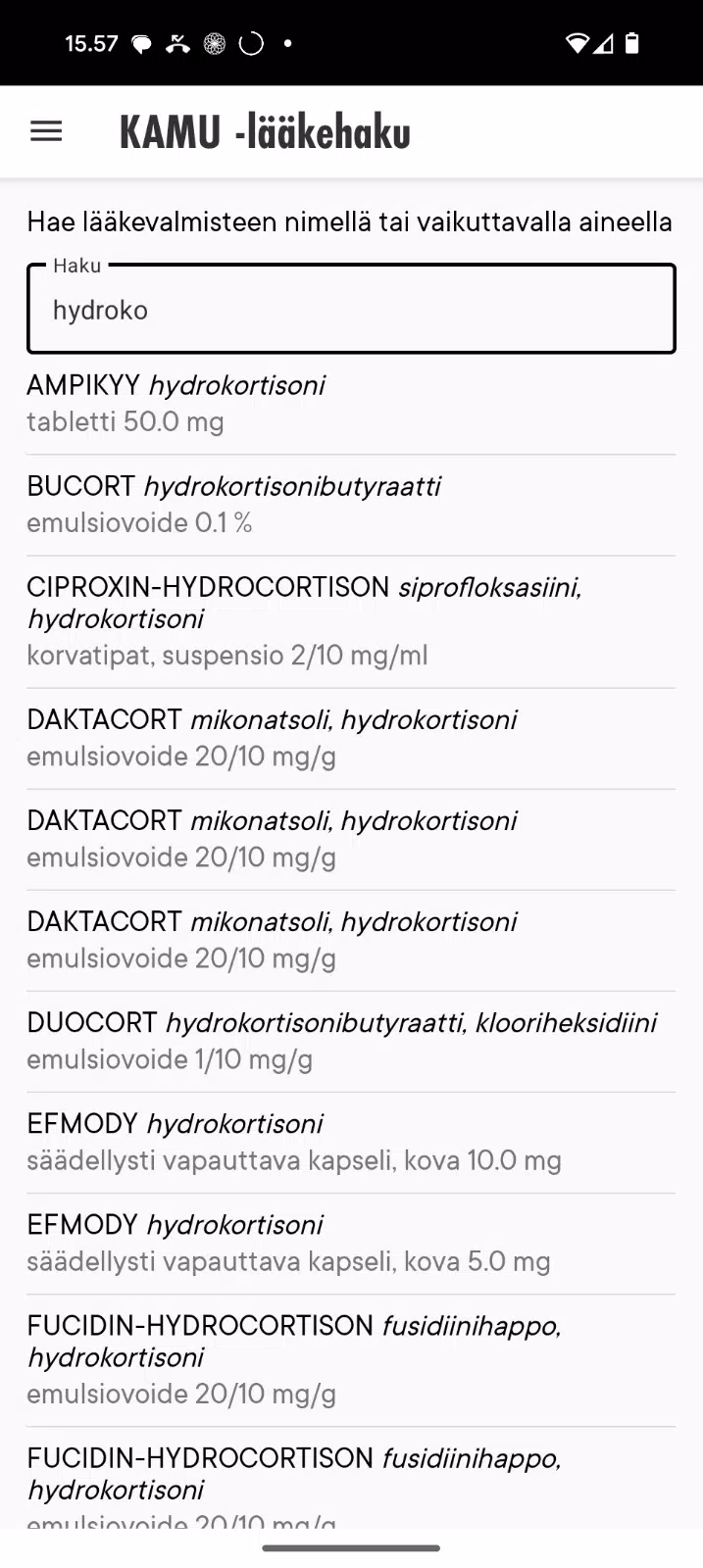
The app offers a straightforward search that accepts brand names and active ingredients and returns ranked matches with the most relevant items first. Filters let users narrow results by administration method and ingredient class so it is faster to distinguish between, for example, an ointment and an oral tablet of the same drug. Controls follow common mobile patterns: tap to open detailed product pages, use a back gesture to return to search results, and access clarification links directly from any product view. Recent searches are easy to revisit, and users can mark items for later review to support pre-competition checks.
The interface is intentionally clean and utilitarian to reduce cognitive load when decisions must be made quickly. Product pages highlight status with readable wording, contextual notes about administration routes, and brief explanations rather than dense regulatory text. Typography and color choices prioritize legibility and quick scanning; icons and short labels are used to call out prohibited ingredients and multi-ingredient warnings. The design aims to support accessibility by keeping navigation simple, offering clear contrast between status indicators, and avoiding clutter so users with limited time can find essential information at a glance.
While KAMU -lääkehaku is a reference tool rather than a game, users experience a progression of trust and efficiency: frequent users learn to interpret classifications faster and set up personal workflows for pre-event medication checks. Customization focuses on workflow rather than cosmetic options — the app lets users organize recent checks, keep a short list of high-priority products to verify before events, and consult the explanatory notes to better understand borderline cases. Regular updates to the underlying database increase the app's long-term utility and encourage periodic review of previously checked items when regulations change.
Information is structured to mirror real-world decision points: search and identify a product, check administration route and active ingredients, read the classification note, and follow suggested next steps. Ambiguous or missing entries are treated as challenges: the app flags them prominently, provides guidance on what evidence to collect, and advises contacting the appropriate authority for official clearance. This workflow helps athletes manage uncertainty without presenting a false sense of automatic compliance.
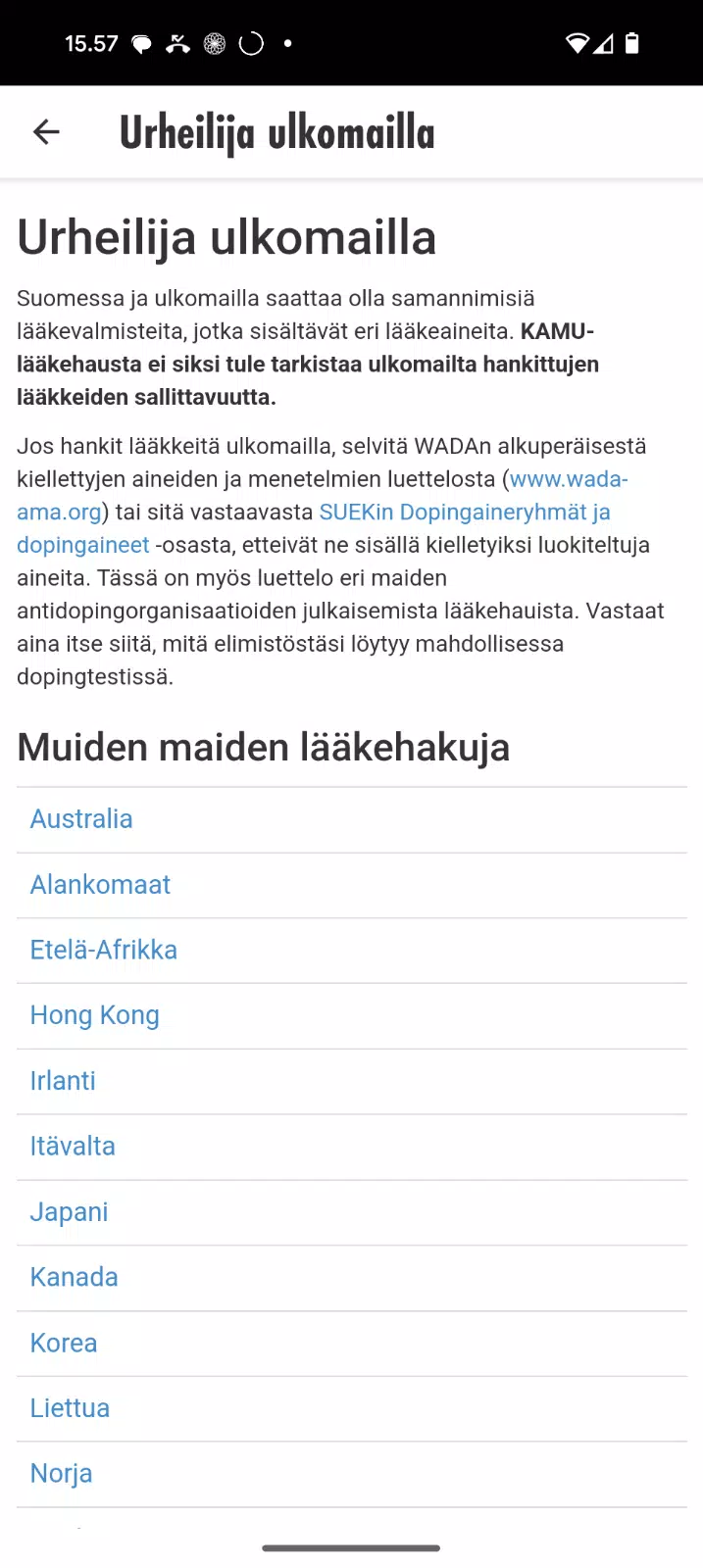
KAMU -lääkehaku covers products available in Finland and excludes special-authorisation medicines, technochemical preparations, homeopathic remedies and certain nutritional supplements, so it should not be used to judge medicines bought abroad or items outside the database scope. The tool is informational and not a substitute for medical advice or an official therapeutic use exemption; final responsibility rests with the athlete. Where classifications are critical, the app encourages users to seek confirmation from anti-doping organizations or medical professionals and documents where to find official guidance.