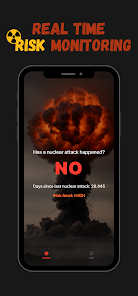
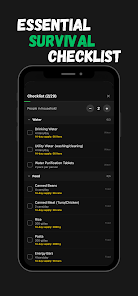
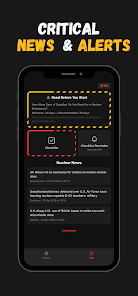
Nuke Check is a fast-paced tactical puzzle game that challenges players to locate, analyze, and neutralize simulated warheads across shifting maps. Combining timed decision-making with resource management, it tasks you with prioritizing threats, deploying tools, and adapting to unpredictable events to keep virtual cities and units safe.
The heart of Nuke Check is its layered challenge loop: detect, assess, and act. Each level presents multiple potential threats with limited information, forcing you to gather intel, choose specialized countermeasures, and execute under a ticking clock. Encounters range from isolated devices to complex scenarios where secondary hazards and civilian areas affect your choices. Success depends on reading the situation quickly, selecting compatible tools, and coordinating actions to avoid cascading failures.
Beyond the basic disarm mechanic, the game introduces modular systems that expand strategic possibilities. Components include sensor drones for reconnaissance, decoys to redirect hostile triggers, and containment units that buy precious seconds. Resource economy plays a central role: you will balance immediate needs against long-term readiness. Players can chain actions for bonus efficiency, set traps to delay enemy escalation, and exploit environmental features such as power grids or terrain to their advantage.
Levels in Nuke Check are varied and dynamic. Urban districts, industrial complexes, and open-terrain testing zones each demand different tactics. Weather and time-of-day modifiers change visibility and sensor reliability, while destructible cover and secondary explosions can alter objectives mid-match. The game offers multiple modes — from single-mission scenarios that teach core skills to extended challenge runs that test endurance and resource management over several interconnected maps.
Progression in the game rewards experimentation and skillful play. Completing missions earns upgrades, unlocking more advanced devices and passive perks. The loadout system lets you assemble custom kits before each sortie: choose between heavy containment gear, agile scouting tools, or specialized electronic countermeasures. Crafting and upgrade trees let you tailor upgrades to your preferred playstyle, whether you prioritize speed, survivability, or preventative measures.
Designed for mobile play, the interface balances clarity with quick access to critical actions. Touch gestures allow rapid deployment of tools and intuitive map navigation, while context-sensitive controls reduce clutter during high-pressure moments. Performance has been tuned to run smoothly across a range of devices, with adjustable graphics and frame-rate settings to preserve responsiveness. Audio cues and subtle haptic feedback provide additional situational awareness without overwhelming visual elements.
Replay value comes from procedural variations, score-based leaderboards, and daily challenge missions that reshuffle objectives and constraints. Achievements encourage diverse strategies and creative problem-solving, while scenario editors and challenge-sharing features let players create and exchange custom missions. Cooperative missions and competitive score runs provide community-driven goals that keep the experience fresh.
Getting comfortable with the game's tempo is essential. Start by learning a few reliable tools and focus on reconnaissance to reduce uncertainty. Manage your resources conservatively early on, and use environmental options to contain damage. Watch how hazards interact and adapt your loadout between missions to close strategic gaps.
To begin, play through the tutorial missions to familiarize yourself with core systems and controls. As you gain upgrades, experiment with different strategies and revisit earlier maps to earn higher scores. Nuke Check balances learning with escalating challenges, making early practice and gradual progression the best way to improve and tackle tougher scenarios.